
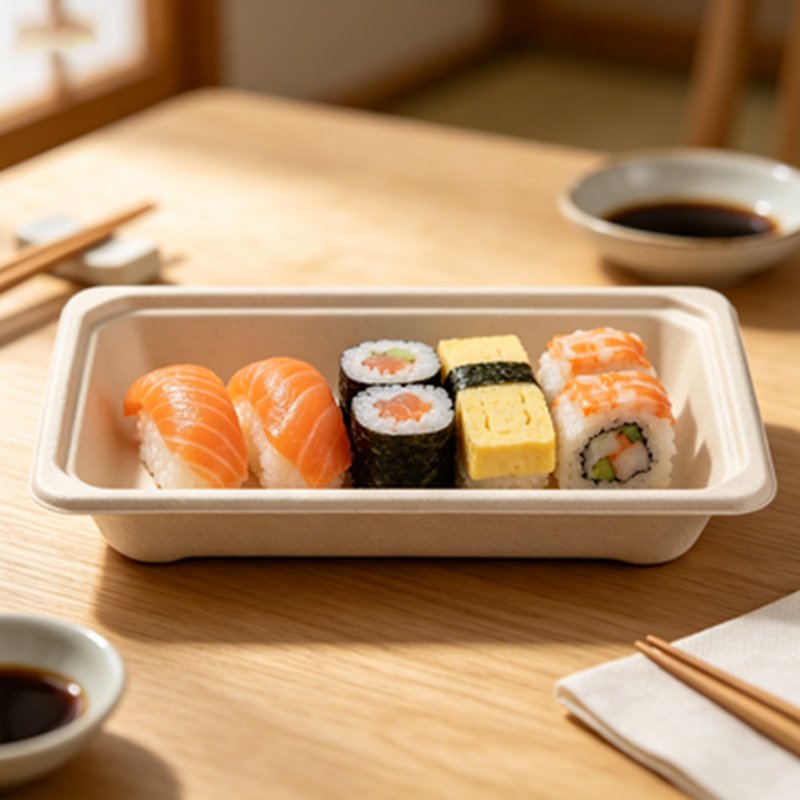
Walk through any tableware catalogue and you will count at least five words doing the same job: eco-friendly, biodegradable, compostable, plant-based, green. Only one of them has a test standard behind it. Sorting out which is which protects you from complaints and, in some markets, from legal trouble.
Biodegradable is a weak word, compostable is a strict one
Almost everything breaks down eventually, so “biodegradable” on its own tells you very little, and in some markets it is restricted on packaging. “Compostable” is tighter. It usually refers to standards such as EN 13432 in Europe or ASTM D6400 in the United States, which look at how fast the material breaks down in a composting environment, whether it leaves residues, and whether it harms plants. Certification marks from independent bodies show that a product has been tested against these standards. When you evaluate a compostable tableware manufacturer, ask for the actual certificate and check that the certified product matches the one you are buying.
There is also a difference between industrial composting and home composting. Many certified items need the high temperatures of an industrial facility. And a certificate is not the same as the local facility being willing to accept it, so for a restaurant it is worth calling the collector first.
Why bagasse is popular
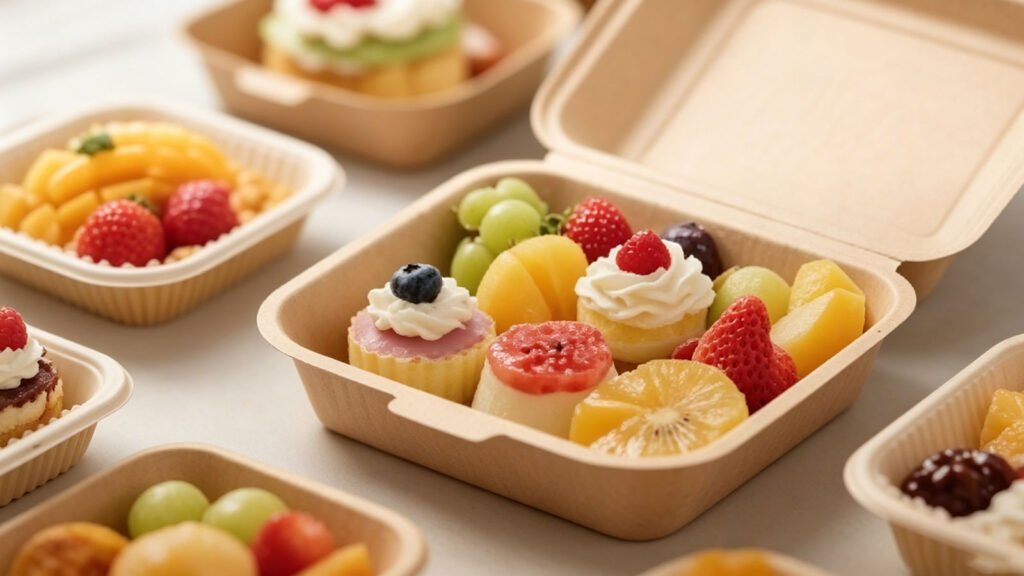
Bagasse is the fibrous residue left after sugarcane is pressed for juice. It is pulped and hot-pressed into plates, bowls and clamshell boxes. For a bagasse tableware manufacturer, the attraction is that it uses an agricultural by-product, handles hot food, and is generally suited to microwave reheating. It also feels sturdier than a thin plastic tray. Wall thickness and press quality matter. A cheap box that goes soft when it meets hot soup creates the sort of customer experience nobody wants to repeat.
The PFAS question
Molded fibre does not repel oil and water by itself, so some products have used fluorinated chemicals (PFAS) for grease resistance. That has become a serious issue. Several jurisdictions have restricted PFAS in food packaging, and many buyers now ask for it explicitly. If you are looking at an eco friendly disposable tableware manufacturer, ask directly whether the product is PFAS-free and request test results, such as a total fluorine test. A statement in a brochure is not enough.
Testing performance before you commit
Order samples and treat them harshly. Fill a clamshell with hot oily food and leave it for half an hour. Stack the plates and carry them. Microwave a bowl. Check lids, since some lids are made from PLA, a plant-based plastic that has its own composting requirements, and some are made from fibre, and the two may not be certified in the same way.
Check how the finished product is packed as well. Plates nested in a sealed sleeve travel better than loose ones, and printed cartons need to survive humid shipping without going soft.
For a China biodegradable disposable tableware manufacturer, ask about lead times, minimum order quantities, print options and carton sizes. Printing matters, because inks and coatings count toward what is certified.
A word on cost, since it decides many purchases. Plant-fibre tableware usually costs more than plastic foam or polypropylene, and the gap depends on volume, wall thickness and printing. Do not compare unit prices alone. Compare what is in the carton, how much breakage you see in transit, and how much shelf space the stack takes. Fibre products that nest well and ship flat can lower the freight cost per piece, which sometimes narrows the difference more than buyers expect.
Whatever wording ends up on your packaging, it should be no stronger than the certificate in your drawer. That one rule keeps most distributors out of trouble.Bagasse and compostable tableware are on the Regreen Global website:https://regreen-global.com/